

Rabby Wallet Token Approvals: What They Do, What They Don’t, and How to Manage Them
You connect a wallet to a DeFi app, approve a token, make a trade, and move on. Months later, that permission may still be active—even if you no longer use the app. The approval is not the same as handing over your wallet or revealing its recovery phrase, but it can authorize a contract to spend a specified token from your address. That distinction is easy to miss, and it matters when assessing wallet security.
Rabby’s browser extension can help make transaction and approval information easier to inspect, but no wallet interface can make an unsafe contract safe. The useful comparison is not “secure wallet versus insecure wallet”; it is how different approval-management approaches handle convenience, visibility, and residual risk. For US DeFi users, the practical goal is to grant only the permissions a task requires, then understand what remains afterward.
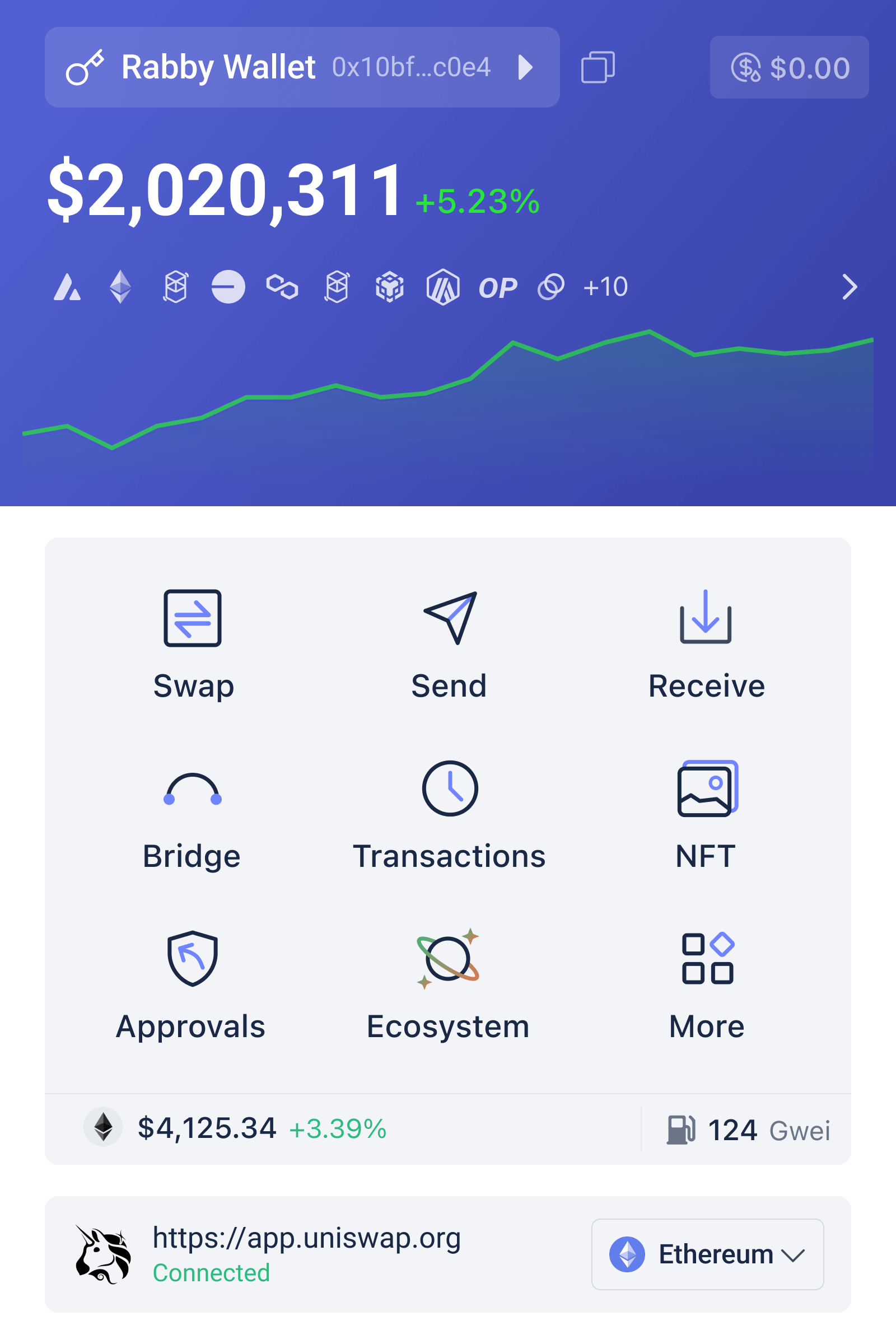
First, separate a token approval from a transaction
Many tokens on Ethereum-compatible networks follow a common pattern: a token contract keeps track of balances, and a separate DeFi contract needs permission to move tokens when you trade, deposit, or interact with a protocol. An approval records that permission. A later transaction can use it, subject to the allowance and the token’s behavior.
This creates two different security questions. A transaction asks, “What will this action do now?” An approval asks, “What may this contract be allowed to do later?” A user can scrutinize a swap and still leave behind a broad allowance that remains usable after the swap. Conversely, an approval by itself does not prove that a contract has taken funds. It is a standing capability, not evidence of a completed transfer.
Some interfaces request an allowance that covers only the intended amount; others may request a very large or effectively unlimited allowance to avoid asking for approval again. A broad allowance can reduce friction and future transaction steps. Its cost is that a compromised, malicious, or otherwise risky spender may have more room to act while the permission remains valid. The exact risk depends on the token, contract, network, and allowance mechanics; “unlimited” should not be interpreted as an automatic loss, but it should prompt closer review.
Three approaches to approvals, and their trade-offs
Rabby’s in-wallet review
A wallet extension can put transaction details and approval requests in front of the user at the moment a site asks for a signature. Rabby is designed for DeFi use, and its appeal is the chance to review an action in the same place where the wallet is connected. This can help users notice that a request is an approval rather than the swap or deposit they expected.
That review is valuable only if the user can interpret it and the information is accurate enough to support a decision. A wallet warning or simulation is not a guarantee that a contract is benign, nor can a browser extension eliminate risks such as a compromised device, deceptive website, malicious contract, or user approving the wrong request. Treat wallet analysis as a layer of defense—not a substitute for checking the app and the action.
If you are preparing to install the extension, use a source you can verify and make sure the publisher and extension details match what you intended to install. The provided rabby extension download page is a starting point, but a link alone cannot establish authenticity; independently check that you are using the official distribution route before entering a recovery phrase or connecting valuable accounts. A legitimate wallet should not need your secret recovery phrase to “verify” an existing wallet on an unfamiliar page.
Manual, amount-limited approvals
A cautious alternative is to approve only the amount needed for a particular action, where the app and token support that choice. This limits the potential scope of a standing permission. The trade-off is more prompts and possibly extra network fees or steps when interacting again. It can also be inconvenient when a protocol needs a different amount than expected, so users may be tempted to approve broadly just to get through the workflow.
Amount-limited approvals are not a complete security strategy. They do not establish that the spender is trustworthy, and they may not prevent every failure mode involving a token or contract. Still, they provide a useful least-privilege principle: give a contract only the authority needed for the task, rather than treating repeated convenience as free.
Separate wallets for different kinds of activity
Some users keep a lower-balance wallet for routine DeFi interactions and a separate wallet for long-term holdings. This reduces the amount exposed to a bad approval or compromised application, provided the wallets are genuinely separated in use and key management. It does not make the active wallet invulnerable, and it adds operational complexity: more recovery material to protect, more addresses to track, and more chances to send funds to the wrong place.
For frequent users, separation can be a sensible containment measure. For someone who struggles to maintain backups or distinguish accounts, a simpler setup may be safer in practice. Security depends not only on the theoretical strength of a design, but also on whether the user can operate it reliably.
Approval management is lifecycle management
A common misconception is that disconnecting a wallet from a website revokes its token approvals. Usually, disconnecting changes the website’s access to the connected wallet session; it does not necessarily erase permissions recorded by a token contract on the blockchain. The approval may remain until it is changed, revoked, or otherwise rendered unusable. This is why “I disconnected” and “I removed the spender’s authority” are different claims.
Revoking an approval generally requires a new on-chain transaction. That means the user needs to select the correct network, identify the relevant token and spender, and pay any required network fee. Revocation can reduce future exposure, but it does not reverse a transfer that already happened, repair a compromised device, or guarantee that every protocol interaction is understood. It also deserves care: selecting the wrong entry or network can create confusion rather than clarity.
A practical review rhythm is to examine approvals after using a new protocol, after an unusual or confusing signing request, and periodically for wallets that interact with many apps. Focus first on permissions you no longer recognize, old applications you no longer use, and allowances that appear broader than the task requires. Avoid treating a long list of approvals as proof of compromise; it is a reason to investigate, not a diagnosis.
A decision framework for everyday DeFi use
Before approving, ask three questions: Is this the contract I intended to use? Is the requested permission proportionate to the action? Will I need this permission again soon? If the spender is unfamiliar, the request does not match the action, or the allowance seems unnecessarily broad, pause rather than clicking through. When the answer is unclear, a small test transaction or a separate, lower-balance wallet may reduce the stakes—but neither removes the need to verify the app.
Afterward, ask whether the permission still has a purpose. A recurring protocol interaction may justify keeping an allowance for convenience; a one-time experiment may not. This is not a universal rule to revoke everything immediately. Repeated revocations add cost and friction, while retained permissions preserve an ongoing risk surface. The right balance depends on how often you use the app, the value held in the wallet, and your confidence in the contract and setup.
A recent Chrome Web Store disclosure dated September 1, 2026, says Rabby Wallet has provided information about its data collection and use, with further detail in the developer’s privacy policy. That disclosure is relevant to evaluating a browser extension, but it is not itself a security audit or a verdict on every privacy practice. Before installing any extension, users should review the current store listing and privacy policy, consider what browser data the extension may handle, and keep the browser and operating system updated. Approval safety and privacy are related parts of wallet hygiene, but they are separate questions.
Looking ahead, clearer transaction previews could make it easier to distinguish a one-time action from a persistent permission. Whether that meaningfully improves outcomes depends on the quality of the underlying contract data and whether users understand the warnings. The useful signal to watch is not simply whether a wallet displays more alerts, but whether it helps users identify the spender, scope, and consequences of a request without implying certainty it cannot provide.
Frequently asked questions
Does disconnecting Rabby from a DeFi site revoke token approvals?
Not necessarily. Disconnecting generally ends or changes the site’s wallet connection; an on-chain token allowance may remain. Check and manage approvals separately on the relevant network.
Is an unlimited token approval always unsafe?
No. It does not mean funds have already been taken, and some users accept the convenience for protocols they use repeatedly. But it grants broader ongoing authority than a task-sized allowance, so the decision should reflect the spender, the wallet’s exposure, and how often the permission is needed.
Can a wallet extension guarantee that an approval is safe?
No. A wallet can present useful information or warnings, but it cannot guarantee a contract’s future behavior, eliminate phishing, or protect a device whose security is compromised. Review the request, verify the application, and treat the extension as one layer in a broader security practice.